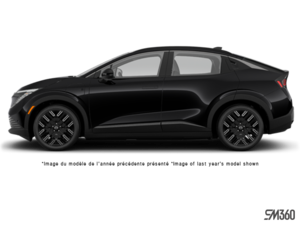




Nissan Announces 2027 LEAF S Pricing With ProPILOT Assist Standard
September 16 2026,

Shopping for an entry-level EV in Alberta usually means weighing sticker price against what you give up to get there. The 2027 Nissan LEAF S changes that math, pairing a value-focused starting price with driver-assist tech that’s normally reserved for pricier trims.
This breakdown walks through where the LEAF lineup starts, where the real jumps in price happen, and which grade actually makes sense for your driving habits.
2027 LEAF Pricing Ladder
|
Grade |
Battery |
MSRP |
Selling Price |
|
S |
53 kWh |
CA$34,998 |
CA$37,966 |
|
S+ |
75 kWh |
CA$45,198 |
CA$48,139 |
|
SV+ |
75 kWh |
CA$48,198 |
CA$51,139 |
|
PLATINUM+ |
75 kWh |
CA$52,998 |
CA$55,966 |
The selling price adds CA$2,200 freight and PDI, a CA$100 A/C charge, and dealer fees up to $621, plus other applicable fees, levies and duties that can vary by region.
Where The Real Price Jumps Happen
The biggest single-grade jump on this sheet isn’t at the top, it’s right at the bottom. Moving from S to S+ adds CA$10,200 to the MSRP, and that’s because it’s the point where the entire powertrain changes, not just the trim badge.
The S runs a 53-kWh battery and a 174-horsepower electric motor good for 254 lb-ft of torque and up to 341 km of estimated range, charged through a 7.2-kW onboard charger. Step to S+ and you get a 75-kWh battery, 214 horsepower, 261 lb-ft of torque, up to 488 km of range, and an 11-kW onboard charger that cuts Level 2 charging time significantly versus the 7.2-kW unit. That’s the breakpoint where LEAF shifts from a commuter runabout to a long-range daily driver.
The next two steps are smaller and more about comfort than capability. SV+ adds CA$3,000 over S+ and brings 18-inch alloy wheels, a heated steering wheel, TailorFit front seating material, Google built-in, a wireless phone charging pad, and rear air vents, while the underlying battery, motor, and charger stay identical to S+.
PLATINUM+ adds a further CA$4,800 and shifts the equipment story again: a 19-inch wheel and tire package, a 14.3-inch touchscreen and Advanced Drive-Assist Display, head-up display, a 10-speaker Bose Personal Plus audio system, a motion-activated power liftgate, a dimming panoramic roof, and a Vehicle-to-Load plug built into the cargo area rather than requiring the J1772 adapter. Powertrain output stays at 214 horsepower and 261 lb-ft, matching S+ and SV+.
The Best-Value Pick: S+
For a shopper who wants range without chasing every convenience feature, S+ is where the math works hardest. The CA$10,200 step from S buys a genuinely different EV: nearly 150 additional kilometres of range, more power, and a faster onboard charger, all in one move.
After that, SV+ and PLATINUM+ add comfort and screen real estate without touching range or output. If your priority is covering more kilometres between charges rather than a heated steering wheel or a bigger display, S+ delivers most of what the lineup offers for meaningfully less than the top two grades.
What PLATINUM+ Actually Buys
At the top of the ladder, PLATINUM+ isn’t about going faster or farther. Range holds at 417 km, slightly below the 463 km SV+ figure and the 488 km S+ figure, since wheel size and equipment weight affect efficiency. What CA$52,998 buys instead is cabin polish: the larger 14.3-inch screen and head-up display, premium Bose audio, a panoramic roof, memory settings, and a built-in V2L plug that skips the external adapter.
It’s the grade for shoppers who’ve already decided range isn’t the deciding factor and want the cabin to match a higher price point.
Standard Features That Support the S Grade’s Value

What makes the S grade’s starting price work as an entry point is what Nissan didn’t strip out to hit it. ProPILOT Assist, which combines Intelligent Cruise Control with steering assistance to help hold a set speed, following distance, and lane position, is standard across every grade, including the S. So is the full Nissan Safety Shield 360 suite: Automatic Emergency Braking with Pedestrian Detection, Rear Cross Traffic Alert, Forward Collision Warning, Lane Departure Prevention, and Blind Spot Intervention.
For Alberta commuters covering longer highway stretches, that combination reduces the moment-to-moment workload of holding speed and lane position, cutting fatigue on longer drives without needing to step up a grade.
- Dual 12.3-inch displays (touchscreen and Advanced Drive-Assist Display)
- Wireless Apple CarPlay and Android Auto
- Heated front seats, heat pump system, and battery heater standard on every grade
Charging Setup and What It Means Day to Day
Every LEAF grade, including the S, uses a dual-port charging setup: a J1772 port on the driver’s side for Level 1 and 2 home charging, and a NACS port on the passenger side for faster public charging with Plug & Charge capability, letting the vehicle authenticate and start a session without a separate app or card at compatible stations.
The S grade’s 7.2-kW onboard charger is the one meaningful hardware difference from S+ and above, which get an 11-kW charger that shortens Level 2 charging times. For a driver plugging in overnight at home, that gap matters less; for anyone relying more on public Level 2 charging, the faster charger becomes part of the case for stepping up.
Vehicle-to-Load is standard across the lineup too, letting the battery power external devices, from e-bikes to small appliances, through an adapter at the J1772 port. On PLATINUM+, that same capability gets its own dedicated plug in the cargo area.
Space for Everyday Errands and Weekend Loads
The LEAF’s hatchback body holds 566.3 L of cargo behind the rear seats and 1,571.6 L with them folded, figures that carry across every grade since the interior shell doesn’t change up the ladder. Front headroom sits at 1,013.5 mm and front legroom at 1,077 mm, enough for daily errands, grocery runs, or hauling gear for a weekend trip without needing a larger vehicle.
Which Grade Fits Your Driving
The LEAF S is built for value-first EV shoppers, first-time EV buyers, and urban commuters who want ProPILOT Assist, full safety tech, and a legitimate 341 km of range without paying for extras they won’t use. It’s the accessible entry point into the lineup, not a stripped-down compromise.
Shoppers who regularly drive longer distances, or who want the larger screens, premium audio, and heated steering wheel found on SV+ and PLATINUM+, will find the CA$10,200 step to S+ (and the smaller moves beyond it) buys real, usable range and comfort. Either way, the decision comes down to how far you drive and how much cabin polish matters to you, not whether the base grade is capable enough to live with.
Finding Your 2027 LEAF at McDonald Nissan
The 2027 LEAF lineup gives Alberta shoppers a wider spread of EV pricing than before, from the value-focused S grade through the range-forward S+ and the feature-rich SV+ and PLATINUM+ grades.
Visit McDonald Nissan in Lethbridge to talk through which LEAF grade matches your commute, ask about delivery timing, and confirm current feature availability with the sales team.